Health Foundations to Broader Understanding
- Adonai Katsir

- Feb 11
- 12 min read
Over the past two days, we have been laying a foundation. We began by looking at health as part of God’s design—woven together with obedience, trust, and faith. From there, we explored the inner landscape of the human experience: how anxiety unsettles the mind, how fear can begin to govern decisions, and how prolonged pressure can quietly wear down hope and discernment. These themes are not abstract. They shape how we respond when pressure moves beyond the personal and into the collective—when events arise that affect entire communities, nations, and the world.
What we turn to today is, admittedly, a more delicate conversation.
The subject of disease, pestilence, and public health touches deeply held beliefs, personal experiences, and strong emotions. This article is not written to judge others, to provoke fear, or to stir division. Nor is it intended to dismiss the genuine care, effort, and compassion that exist within modern health systems.
Rather, what follows is an observation—an honest and prayerful examination of how health crises have shaped society in the past, how they shape it today, and what Scripture warns us to be mindful of as we approach the closing chapters of history. Our aim is not to accuse, but to discern. Not to alarm, but to understand.
We recognise that some of the themes discussed may challenge familiar assumptions. We ask only that they be read with the same spirit in which they are offered: thoughtfully, calmly, and with a willingness to weigh all things carefully against the Word of God.
May you be blessed as you consider what we ourselves have been led to reflect on in our own journey of faith.
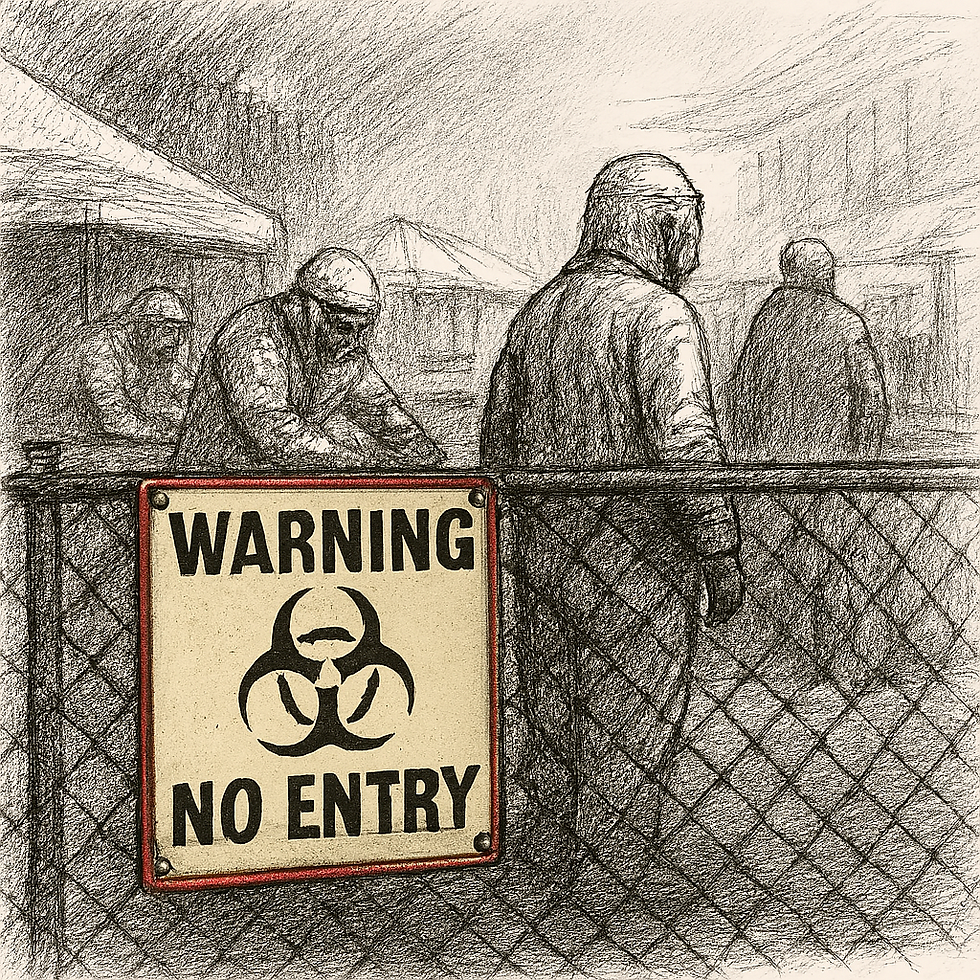
Pestilence, Disease, and the Limits of Human Control
Throughout history, moments of widespread disease have reshaped societies in ways that go far beyond health alone. They influence how people live, how communities organise themselves, and how much authority is entrusted to systems designed to protect life. Scripture does not treat these moments as anomalies. Jesus Himself spoke plainly about pestilences as part of the conditions that would increase as history moves toward its close, not as causes for panic, but as signs calling for watchfulness and discernment.
This perspective matters, because it helps us approach health crises without fear or denial. Pestilence, in the biblical sense, is not simply about illness spreading. It is about pressure—pressure that exposes where trust rests, how decisions are made, and what people turn to when familiar structures feel fragile.
The modern world has lived through several defining health crises. The 1918 Spanish flu swept through a global population already weakened by war and industrial upheaval. Smallpox outbreaks prompted the first large-scale public health interventions. Polio reshaped how society viewed disability, prevention, and medical authority. Each of these events brought genuine suffering, and each also accelerated reliance on organised medical systems to manage risk on a mass scale.
There is no value in denying that many developments arising from these periods were beneficial. Advances in sanitation, the discovery of antibiotics like penicillin, improved surgical techniques, and a growing understanding of hygiene have saved countless lives. These developments reflect human ingenuity and, at their best, a desire to preserve life and relieve suffering.
At the same time, these crises marked a turning point in how health itself was understood. As populations grew and urban centres expanded, self-sustaining ways of living gave way to mass systems designed to serve millions at once. Health increasingly shifted from something nurtured daily through lifestyle and environment to something managed reactively through intervention. Prevention became institutional. Treatment became standardised. Dependence on external solutions steadily increased.
Vaccines emerged within this context, promoted as a means of strengthening immunity and controlling disease spread. For many, they represented progress and protection. Yet their rise also reinforced a broader cultural shift—the idea that resilience could be engineered externally, rather than cultivated internally. This is not a moral judgement, but an observable change. Over time, confidence in the body’s God-given capacity to maintain health through obedience to natural law was gradually replaced with confidence in pharmaceutical solutions designed to intervene when that balance failed.
These patterns did not stop in the early twentieth century. In earlier generations, outbreaks and responses were often regional, shaped by local conditions and limited communication. In contrast, the global lockdowns of 2020–2023 revealed just how interconnected the modern world has become. What began as a health concern in one part of the world quickly reshaped daily life across nations—affecting movement, work, worship, supply chains, and economies on a global scale.
Emergency powers were enacted. Restrictions became standardised across borders. Compliance was encouraged as a civic responsibility, not only to protect oneself, but to protect society at large. Many measures were introduced with the stated aim of preserving life. Yet the speed and scale at which these responses spread raised important questions—not only about effectiveness, but about trust, limits, and authority in an increasingly interconnected world.
What makes this period particularly striking is how closely it mirrors earlier moments of history, even as the scope has expanded. Between 1888 and 1892, debates surrounding health mandates, medical authority, and personal conscience emerged alongside significant religious movements and social change. While the circumstances are not identical, the pressures are observably similar. In both periods, health became the entry point for broader questions about obedience, dependence, and the role of the state in matters that touch personal conviction.
The difference today is scale. What was once localised now moves globally, with decisions made in one place producing immediate effects across cultures, economies, and nations. Scripture’s warnings about the final days consistently assume such a world—one where systems are interconnected, influence is widespread, and pressure can be applied broadly and swiftly. Seen in this light, modern health crises do more than test medical capacity; they reveal how prepared humanity is for global challenges that require discernment, restraint, and faith grounded beyond human systems alone. This is where discernment becomes essential. Discernment, in the biblical sense, is not suspicion or self-reliance. It is not the rejection of care, knowledge, or compassion. Rather, it is the ability to see clearly under pressure—to weigh decisions carefully, to recognise limits, and to remain anchored in God rather than swept along by fear or urgency.
Health crises test this discernment in unique ways. They touch the body directly. They provoke anxiety. They create urgency. And in that urgency, people are often asked to surrender responsibility, conscience, or trust quickly, in exchange for safety. Scripture consistently warns that such moments require calm, grounded faith—not panic, not blind confidence, and not withdrawal, but thoughtful reliance on God’s guidance. These realities invite honest reflection. Not to provoke anxiety about the future, but to ask whether our foundations are strong enough to endure uncertainty. If another crisis were to arise—whether through disease, economic instability, or conflict—would our trust rest primarily in systems that may falter, or in principles designed by a God who sees beyond the present moment?
This question is not meant to unsettle, but to prepare. Scripture never presents preparation as fear-driven. It presents it as wisdom. And wisdom begins with recognising both the value and the limits of human control.

Pestilence in Scripture: Warning Without Panic
When Jesus spoke about the closing period of earth’s history, He did not do so vaguely. His words were measured, direct, and deliberately calming. Among the signs He listed—alongside wars, unrest, and deception—He included pestilences:
“And ye shall hear of wars and rumours of wars… and there shall be famines, and pestilences, and earthquakes, in divers places.”— Matthew 24:6–7
Luke records the same warning, adding an important detail:
“And great earthquakes shall be in divers places, and famines, and pestilences; and fearful sights and great signs shall there be from heaven.”— Luke 21:11
What is striking is not simply that pestilence is mentioned, but how it is framed. Jesus does not present disease outbreaks as divine surprises or arbitrary punishments. Nor does He instruct His followers to panic, withdraw, or speculate endlessly about causes. Instead, He repeatedly emphasises watchfulness, sobriety, and discernment:
“Take heed that ye be not deceived.”— Luke 21:8
In Scripture, pestilence functions as a signal, not a verdict, God uses them to try and turn the heart back to Him and it is one of several pressures that intensify toward the end, creating conditions in which faith, trust, and allegiance are tested. The emphasis is never on calculating timelines, but on recognising the environment in which deception and fear can flourish if discernment is lost.
The most recognised example of this pattern in Scripture is found in the plagues of Exodus, where widespread disease revealed far more than physical crisis—it exposed trust, obedience, and where reliance truly rested; and history itself offers quieter echoes of that same posture.
During the Black Plague of the 17th century, the small Bavarian town of Oberammergau vowed to turn to God in prayer and repentance, dedicating themselves to regular public remembrance of the life, death, and resurrection of Christ. From that commitment emerged the Oberammergau Passion Play, which has been performed every ten years for over four centuries.
This account is not presented as a formula for protection, nor as a claim that faith prevents suffering. Rather, it serves as a reminder that in times of widespread fear and uncertainty, some have chosen to respond by anchoring their trust more deeply in God—shaping both their present response and their future memory around Him.
The Bible’s treatment of disease throughout history follows this same pattern. In the Old Testament, widespread illness often appears in contexts where natural and moral law have been ignored or disrupted—not as instant retribution, but as consequence. The laws given to Israel regarding cleanliness, diet, rest, and separation during outbreaks were not arbitrary rules. They were protective principles designed to preserve life and limit harm within the community.
Importantly, Scripture also makes clear that not every illness is the result of personal wrongdoing. Jesus Himself corrected this assumption when asked about the man born blind, stating plainly that suffering should not be reduced to simplistic blame. Yet even in those moments, Christ did not deny that obedience to God’s design carries protective power for body and mind.
This balance is critical. Scripture neither denies the reality of disease nor attributes it entirely to chance. It presents a world where human choices, environmental conditions, and spiritual realities intersect. Pestilence, then, becomes one of the ways those intersections are exposed—revealing weaknesses in systems, habits, and assumptions that may otherwise go unexamined.
In the last days, Jesus warned that these pressures would not decrease, but intensify. That warning is not given to frighten, but to prepare. Preparation, in the biblical sense, is not about stockpiling or self-reliance. It is about cultivating a faith steady enough to remain clear-minded when uncertainty rises and voices compete for trust.
Seen this way, pestilence is not merely a medical issue. It is a spiritual environment—one that tests whether decisions are driven by fear or guided by wisdom, whether trust rests ultimately in human control or in God’s sustaining care.
With that biblical framework in place, we can now look more closely at how societies respond to such crises—and why the line between care and control becomes increasingly important when pressure is widespread.
Care, Healing, and the Question of Dependence
Moments of widespread illness naturally awaken a desire to care for one another. Scripture affirms this impulse. Compassion, service, and the preservation of life are not opposed to faith—they are expressions of it. Throughout history, care for the sick has been one of the clearest outworkings of Christlike love. At the same time, Scripture consistently draws a distinction between care and dependence.
Care seeks to support life, restore balance, and relieve suffering. Dependence answers a different question: where does ultimate trust rest when pressure increases? In times of crisis, this distinction can become blurred. What begins as care can quietly shift into reliance on systems or interventions as the primary source of safety and peace. The Bible never condemns the use of means. Yet it repeatedly cautions against placing final confidence in human power alone:
“It is better to trust in the LORD than to put confidence in man.”— Psalm 118:8
This principle becomes especially important when health solutions promise not only treatment, but reassurance—certainty in an uncertain world. When relief is offered quickly and fear is high, dependence can form without being consciously chosen.
Scripture presents healing differently. Healing, in the biblical sense, is not merely the removal of symptoms, but restoration—of body, mind, and trust. James writes plainly:
“Is any sick among you? let him call for the elders of the church; and let them pray over him… and the prayer of faith shall save the sick.”— James 5:14–15
This does not deny practical care. It places healing within a relationship of trust and submission to God’s will. Healing flows from God, whether through means or without them, but dependence remains anchored in Him.
The Bible also warns that, as history moves toward its close, extraordinary signs and wonders will increase—some of them appearing beneficial, even healing in nature:
“For there shall arise false Christs, and false prophets, and shall shew great signs and wonders; insomuch that, if it were possible, they shall deceive the very elect.”— Matthew 24:24
“And he doeth great wonders… and deceiveth them that dwell on the earth by the means of those miracles.”— Revelation 13:13–14
These warnings are not given to cause suspicion of every act of healing, but to remind us that miracles alone are not proof of divine approval. In the last days, Scripture indicates that the issue will not be whether power is displayed, but whether allegiance is rightly placed.
Scripture also recognises something deeply human: when healing is experienced—especially when it appears sudden or extraordinary—it stirs powerful emotion. Gratitude, relief, and awe naturally draw the heart toward the one who brought relief. In such moments, belief can shift quickly from God Himself to the agent through whom healing came. Yet Jesus consistently redirected attention away from the miracle and back to obedience. After healing, His words were often simple and searching:
“Go, and sin no more.”— John 5:14; John 8:11
The miracle was never the end. Alignment with God’s Word was. This distinction matters profoundly in the last days. Scripture warns that signs and wonders—some appearing benevolent and restorative—will not always lead toward truth. When healing is divorced from obedience, when God’s law is softened or His Word is presented as changed, the result is not salvation but redirection:
“Man shall not live by bread alone, but by every word that proceedeth out of the mouth of God.”— Matthew 4:4
True healing, biblically understood, draws people closer to Christ’s character, Christ’s teaching, and Christ’s call to repentance and faith. Any power—however convincing—that leads away from obedience to God’s Word ultimately leads away from the salvation Christ offers.
This does not call for fear or rejection of care. It calls for clarity. Scripture invites God’s people to value compassion without surrendering conscience, to use means without replacing trust, and to seek healing without allowing dependence to drift from the Healer Himself. Understanding this difference might have Salvational consequences.

Discernment, Preparation, and Readiness — Without Fear
As we step back and look at the themes we have explored today, one truth becomes increasingly clear: Scripture does not call God’s people to live in fear of what is coming, but neither does it encourage passivity or unthinking confidence. Instead, it repeatedly calls for discernment—a quality that cannot be manufactured by human wisdom alone.
Discernment, biblically understood, is not suspicion, independence, or self-reliance. It is the ability to see clearly under pressure, to weigh choices carefully, and to remain anchored in God’s Word when circumstances demand quick decisions. Scripture reminds us that this kind of clarity does not arise naturally from the human heart:
“If any of you lack wisdom, let him ask of God, that giveth to all men liberally, and upbraideth not; and it shall be given him.”— James 1:5
Health crises, especially on a global scale, test this discernment in unique ways. They touch the body, stir emotion, and create urgency. In such moments, the temptation is not always toward rebellion, but toward surrender—yielding trust, conscience, or responsibility too quickly in exchange for safety and reassurance.
Yet Scripture consistently presents preparation as something deeper than external readiness. Jesus’ warnings about the last days were never meant to provoke panic or prediction, but steadiness. He spoke of watchfulness, endurance, and faith that remains settled even when the world feels unstable:
“See that ye be not troubled.”— Matthew 24:6
This kind of readiness does not come from knowing every detail of future events. We are to look at events and watch for the increase in severity and frequency on these as proof that His Word is sure. Understanding this should bring alignment of mind, body, and heart, into harmony with God’s design. A life ordered by His principles is less easily shaken, less dependent on fear-driven solutions, and more capable of responding wisely when pressure increases.
This is why health, in the biblical sense, matters so deeply. Not as a guarantee against illness, and not as a measure of righteousness, but as part of God’s provision for clear thinking, steady faith, and endurance in difficult times. A body cared for, a mind at rest in God, and a conscience guided by His Word together form a foundation that is resilient rather than reactive.
In closing we note that the purpose of this discussion has not been to predict outcomes or prescribe responses, but to invite reflection. Where does our trust rest? What shapes our decisions when certainty is scarce? And are we cultivating a faith capable of standing calmly when familiar supports are tested?
These questions are not meant to unsettle, but to prepare and as we move forward, the focus will turn from observation to application—not toward rigid rules, but toward practical principles that strengthen health, simplify dependence, and support faith that endures.
For now, we leave this thought with you: true preparation for the days ahead begins not with fear of what may come, but with daily alignment to the God who already sees the end from the beginning.


Comments