War and Rumour of Wars: Crisis as Catalyst

Not everyone will receive what is about to be stated. Some will criticise it, some will dismiss it, and others will continue as though nothing has changed. Yet there are moments when it becomes necessary to stop, take stock of the situation and understand if what we have always done is not giving us different result, then we should reconsider the way we are approaching things. And with what is going on around the world right now, when normality is almost as complete departure from reality, then maybe it's time to search the Scriptures, and to seek discernment, because what is taking shape, even now, may well be leading the world toward a time for which few are prepared.
There have always been voices warning that the world cannot continue indefinitely as it is. In every generation, periods of uncertainty have given rise to those who speak of failing systems, economic instability, and the weakening of the structures upon which ordinary life depends. Yet because such warnings have often risen and faded without immediate fulfilment, many have learned to ignore them. They are set aside as exaggeration, absorbed into the noise of public commentary, or dismissed as the language of fear. Life goes on, routines remain, and the world appears stable enough to reassure itself that whatever pressures arise, the system will hold.

That assumption has become one of the great comforts of the modern age. The rhythm of daily life reinforces it. Transactions continue. Goods remain available. Systems function. Institutions adapt. Even when corrections come, even when markets shake, even when conflict spreads, the larger machinery of global life has so far continued to move, and because of this many have come to believe that continuity is normal, that stability is self-sustaining, and that the world, however strained, will keep correcting itself as it always has.
Yet beneath that appearance of stability, something else has been unfolding. What once developed separately no longer remains separate. Economic pressure, geopolitical tension, resource vulnerability, and shifting alliances are increasingly intersecting, not in isolated ways, but in overlapping forms, so that strains which might once have remained local now reverberate through wider structures. The issue is not merely that individual events are taking place, but that they are emerging within a world far more interconnected, far more dependent, and far more vulnerable to convergence than in generations past.
Take the question of energy. Oil is not merely one commodity among many. It sits near the centre of modern life in ways most people rarely stop to consider. It fuels transport, supports agriculture through fertilisers, underpins the production of countless everyday goods from plastics to medicines, and enables the movement of products through the global supply chain. Its role is so deeply embedded in the structure of daily life that its importance is often hidden by its normality. Yet when pressure is applied to it, the effects do not remain local. They move outward through production, transport, availability, cost, and supply itself, until what first appeared as a regional disturbance begins to place strain on systems much farther removed from its point of origin.
That is how convergence works. A pressure in one place begins to expose weakness in another. A disruption in one sector begins to reveal the dependency of many others. What first appears isolated begins to gather consequence. And as multiple pressures begin to overlap, the result is not always immediate collapse, but something subtler and in some ways more dangerous: the steady weakening of resistance within the system and within the people who live by it.
That is the point many fail to grasp. Under ordinary circumstances, change is resisted. What is familiar is defended. What appears to function is rarely questioned. But when pressure lingers, when uncertainty becomes prolonged, when disruption ceases to feel temporary and begins instead to settle over public life, the mind changes. The resistance that would once have rejected new systems begins to soften. What once seemed excessive begins to look practical. What once seemed intrusive begins to appear necessary. This shift does not arrive with fanfare. It emerges gradually, through fatigue, through fear, through instability, and through the growing desire for a resolution strong enough to prevent the same crisis from happening again.
This is what crisis does. It does not merely disturb. It exposes and reveals the limits of existing systems, the fragility of structures assumed to be secure, and the fact that what many trusted was never as stable as it appeared. But it does more than expose weakness. It also creates appetite. It produces a longing for stronger order, deeper coordination, broader oversight, and systems capable of preventing repetition. That appetite becomes the seedbed of acceptance.
Once that begins, solutions no longer remain confined to the problems that produced them. They spread outward. Institutions begin to cooperate in ways they would not under calmer conditions. Authorities align around shared concerns. Systems that once functioned independently move toward common structures. What begins as practical coordination slowly becomes larger than the crisis that first justified it.
This is where the last fifty years matter. The movement toward global economic interdependence did not appear overnight. Over recent decades the world has steadily been drawn into deeper financial agreement, wider currency coordination, tighter systems of exchange, and increasingly interconnected markets that allow values to be balanced, measured, and managed across borders. This brought efficiency, expanded trade, and created the appearance of strength through integration. Yet the same interdependence that promised stability also created dependence, and dependence always opens the door to control.

That first phase was alignment, while the next phase is tightening of the systems toward unity. Where what began as shared systems can easily become monitored systems. What began as coordinated exchange can then also become traceable exchange. What began as economic integration can begin to move toward economic management, and from management toward regulation, until participation itself is no longer defined simply by possession or productive ability, but by one’s place within the system and one’s compliance with its terms.
This is where the digital shift becomes so significant. Where once exchange was largely physical and decentralised, it is now increasingly digital, structured, recorded, and visible. Transactions are no longer private in the way they once were. Participation is increasingly tied to systems that can be monitored, adjusted, and, when required, restricted. This is presented as progress, and in many ways it is. It offers speed, efficiency, convenience, security, and integration. Yet at the same time it creates a framework in which access can be conditioned, permissions can be modified, and daily participation can become dependent on continued compliance.
That is not yet the full reality in every place, but the framework is clearly forming.
And once the framework exists, the question is no longer whether such control is conceivable, but how far it may ultimately extend.
History gives a sobering answer. Authority rarely remains confined to its first purpose. Economic influence expands into social influence. Social influence strengthens political influence. Political influence, once combined with crisis and justified by necessity, begins to extend beyond administration and into conscience itself. What is first presented as a way to preserve order gradually becomes a mechanism for defining acceptable behaviour, and from there it is only a short distance before systems begin to demand not just outward compliance, but inward agreement. That is the point where the issue ceases to be merely economic. It becomes religious.
And it is here that the distinction of Scripture must be recognised, not simply as another body of religious writing, but as something that speaks beyond the present moment, because while many systems offer guidance for life, few claim to reveal the direction of history itself. The Word of God does not limit itself to isolated events or individual instruction but unfolds a broader picture in which present conditions and future outcomes are connected, showing that what develops in the world is not random, but part of a larger movement that leads toward a defined conclusion.
For this reason, the matter of prophecy is not centred on money, trade, or administration, even though it passes through them, but on worship, loyalty, and allegiance, because systems that begin with economics do not remain there, but move beyond behaviour and into belief, beyond participation and into conviction, until what is required is no longer simply that one function within society, but that one do so on terms defined by powers that seek more than civil order.
This is why the Word of God must be allowed to speak at this point, because history is not unfolding without direction, nor is humanity left to interpret events without guidance. Scripture does not present the world as trapped in endless repetition, but reveals that the One who sees the end from the beginning has already spoken, declaring what will come to pass, not as possibility, but with certainty, for it is written that God cannot lie (Titus 1:2), and that His word “shall not return unto me void, but it shall accomplish that which I please” (Isaiah 55:11). So, this reality changes how the present moment must be read.
For the world does not stand apart from what has been spoken, but exists within it, moving through a history that is neither empty nor without structure, where mercy has been extended, truth has been revealed, and opportunity has been given—not indefinitely, but within a period that carries its own boundary, for the conflict between Christ and Satan is not perpetual, nor left unresolved, but moves steadily toward a conclusion already declared.
And within that movement, the time granted to humanity is not without limit, but is bound to that greater conflict, unfolding within a framework already marked out in Scripture, so that though no man knows the day nor the hour, the signs surrounding the close of this age have been given, not to invite speculation, but to awaken discernment, that God’s people would not walk blindly into its final scenes.
Scripture gives patterns, sequences, and markers, not so that men might boast in calculation, but so that they might recognise when the world is moving into the very conditions God warned about. The point is not to force every crisis into prophetic fulfilment, but to recognise that the pattern itself is not uncertain. Christ did not merely speak of isolated events, but of an environment: “And ye shall hear of wars and rumours of wars... for all these things must come to pass, but the end is not yet” (Matthew 24:6). Then He added, “For nation shall rise against nation, and kingdom against kingdom... All these are the beginning of sorrows” (Matthew 24:7–8). That is not the language of calm continuation, but rather, it is the language of pressure building.
It describes a world in which unrest does not resolve but multiplies; where instability is not a passing interruption, but the beginning of an escalating condition, where crisis becomes the environment in which something larger takes shape. That is why the present moment carries weight. For if the Word of God is true—and it is, according to its own evidence—then the convergence of conditions now forming cannot be dismissed as incidental. They are not random. They are not meaningless. They are not detached from the larger prophetic movement already revealed.
This does not mean that every war is the final war, nor that every crisis marks the immediate close of history. But it does mean that the direction itself is not uncertain. As the appointed conclusion of this conflict draws nearer, the conditions that precede it do not soften. They intensify, they gather and they overlap. They create precisely the kind of environment in which the final movements of human history can unfold with increasing speed.
Seen in that light, crisis takes on a different meaning. It is no longer merely disruption in isolation, but part of a broader movement within a conflict that extends beyond what is visible. Forces working through deception, instability, pressure, and influence do not act without consequence, and those used within such movements do not always know the larger role they are serving. Yet even here the sovereignty of God stands above the disorder. What is intended for disruption can be permitted in such a way that the world is moved—its systems reshaped, its structures realigned, and its people drawn, often unknowingly, toward the very conditions in which what has been foretold can take place.
That movement does not rely on immediate force, but it works through pressure and when time calls for it, it advances through necessity as it gains acceptance through prolonged instability, until what would once have been rejected begins to seem unavoidable, and what once seemed impossible begins to appear not only possible, but necessary as the solution to the issue.

Scripture does not leave the outcome vague. It speaks of a world drawn into unified response, into concentrated power, and into a form of allegiance enforced through control. The issue becomes unmistakable in Revelation 13, where the world is shown moving beyond admiration into submission: “all the world wondered after the beast” (Revelation 13:3). That wonder is not mere curiosity. It is the language of astonished acceptance, of a world willing to follow what it should have resisted.
The chapter goes further still as it shows that the final system will not only command attention, but worship, because when Scripture is read carefully, we see that the second beast “causeth the earth and them which dwell therein to worship the first beast” (Revelation 13:12). There it is plainly: the final crisis is not simply economic, nor merely political, but religious. Worship is the issue. Allegiance is the issue. The system does not stop at shaping commerce. It reaches for conscience.
Then comes the mechanism by which that allegiance is pressed upon the world: “that no man might buy or sell, save he that had the mark” (Revelation 13:17).
This is not an isolated act of control appearing out of nowhere. It is the culmination of a world already conditioned by crisis, already trained toward coordination, already dependent on tightly governed systems, already acclimatised to monitored participation, and already prepared to accept restrictions for the sake of order, safety, and unity. What Revelation describes is not detached from the pressures of history. It is the end result of them.
This is where the present crisis must be taken seriously, not as though a single headline fulfils all prophecy, but as part of a converging world already moving in the direction Scripture has outlined, now seen unfolding through the everyday events that shape our lives.
Economic alignment has not emerged by accident, but through decades of increasing interdependence, where systems have been drawn together, values have been stabilised across borders, and the foundations for unified control have been steadily established. That same system is now tightening, becoming increasingly digital, increasingly structured, and increasingly capable of regulating participation, so that what was once distributed begins to concentrate, and what was once optional begins to carry expectation.
From there, the shift is not difficult to trace. As authority concentrates, social conditioning follows, and as pressure is applied over time, acceptance begins to form, not through force alone, but through necessity, until the structures that once served become the structures that define, setting the stage exactly as Scripture has foretold.
These are not random developments of unrelated merit. They are the conditions through which the final system becomes possible. And when the final link brings religion into that structure—as prophecy makes clear it will—the pressure will no longer be confined to policy or economics, but will fall upon conscience, where the issue is no longer how one participates, but who is to be obeyed, whose authority is supreme, and whether one will stand with the Word of God or yield to a world united in defiance of it.
This is where the nature of spiritualism must be understood without ambiguity, not as a fringe belief confined to the edges of society, nor as a harmless curiosity that occasionally surfaces in times of uncertainty, but as the manifestation of a real and active interaction with the unseen—one that presents itself through communication with the dead, through apparitions, through supernatural encounters, and through messages that appear to bring comfort, guidance, and illumination, while standing in direct contradiction to what God has already revealed.
It does not approach the world in a form that invites rejection, nor does it present itself as something to be feared, but rather as something to be received, something that offers reassurance in the face of uncertainty, something that provides answers where human systems have failed, and something that appears to bring clarity at a time when clarity feels absent, which is precisely why it gains ground.
For as the pressures upon the world increase, and as the limits of human solutions become more apparent, the search for answers does not diminish—it expands, moving beyond what can be measured, beyond what can be explained, and into the realm of what is experienced, so that while this does not create the unseen, it does create an openness to it, and within that openness what was once dismissed begins to be reconsidered, what was once questioned begins to be explored, and what was once resisted begins to be accepted.

It is within this environment that manifestation becomes significant, not as isolated or random occurrences, but as part of a broader movement in which the unseen begins to present itself in ways that appear increasingly consistent, increasingly credible, and increasingly authoritative, whether through apparitions that claim to be the dead, through beings that present themselves as external intelligences offering guidance, through signs that appear to confirm what is being taught, or through messages that call for unity, peace, and a higher understanding that seems to rise above the divisions that have long defined the world.
These things do not stand apart from the conditions already described, but align with them, reinforce them, and move in step with them, becoming part of the same convergence that is drawing the world toward a unified response.
This is why the deception works, not because it openly opposes belief, but because it reshapes it, not because it denies truth outright, but because it redefines it, meeting the world in its instability, speaking into its uncertainty, and offering what appears to be resolution—bringing together what has been divided, answering what has been unresolved, and providing a sense of direction at a time when direction feels lost.
And because it appears to solve the very problems crisis has exposed, it is not resisted, but embraced. In this way, the visible and the unseen no longer operate as separate realms, but begin to move together, reinforcing one another, until the systems of the world and the messages being received both point toward the same conclusion, and when that convergence is complete, what follows is no longer difficult to discern, for a world that has been conditioned through crisis, aligned through systems, persuaded through experience, and unified through shared belief does not resist when allegiance is required—it accepts it.
What Scripture reveals at this point is not a single force acting alone, but a convergence that brings together what once appeared separate, so that the structures already forming in the world do not remain merely political or economic but become joined to a spiritual influence that no longer stays hidden.
It speaks plainly of a time when “the dragon, and the beast, and the false prophet” act together, not in isolation, but in alignment, their influence moving outward through “spirits… working miracles” (Revelation 16:13–14), going into the world with purpose, drawing nations, shaping response, and bringing what is divided into agreement.
What emerges is not confusion, but coordination, where different influences, though distinct in form, begin to move in the same direction, until what once appeared unrelated starts to speak with a shared voice and produce a shared result, and the distinction between them gradually gives way to a single, converging movement.
It is at this point that the spiritual dimension of the final crisis becomes clear, not as something distant or symbolic, but as something active and persuasive within the world itself, working in a way that does not immediately draw resistance, because the danger is not simply that deception exists, but that it presents itself in a form that appears credible.
It does not come openly as darkness, nor does it confront belief in a way that would cause it to be rejected, but instead carries the appearance of light, offering what seems like truth and speaking with an authority that feels convincing, so that what is false is not resisted, but received, and what stands in contradiction to the Word of God is accepted as though it were progress.
Scripture does not soften this warning, but makes clear that what unfolds is not empty illusion, but a deception marked by “all power and signs and lying wonders” (2 Thessalonians 2:9), where what is seen and experienced begins to reinforce what is believed, and where the line between truth and error becomes increasingly difficult to discern without a foundation grounded firmly in the Word of God.
And it is here that the nature of spiritualism must be understood plainly, not as a vague idea or a fringe belief, but as a real and present manifestation of deceptive interaction with the unseen, appearing through communication with the dead, through apparitions, through supernatural encounters, and through messages that offer comfort, guidance, and illumination, while standing in direct contradiction to what God has already revealed.
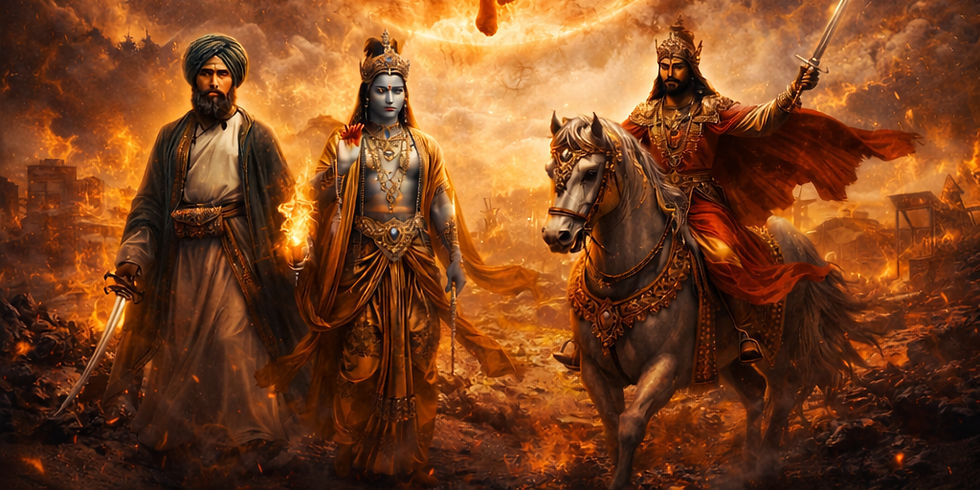
It does not present itself as something to be feared, but as something to be received, offering reassurance in the face of uncertainty and providing answers where human systems have begun to fail, and it is precisely for this reason that it gains ground, because as the pressures upon the world increase and the limits of human solutions become more apparent, the search for answers does not cease, but expands beyond what can be measured or explained and into what can be experienced.
This does not create the unseen, but it does create openness to it, and within that openness what was once dismissed begins to be reconsidered, what was once questioned begins to be explored, and what was once resisted begins to be accepted, forming the very conditions in which manifestation becomes significant, not as isolated events, but as part of a broader movement in which the unseen presents itself in ways that appear consistent, credible, and increasingly authoritative.
These manifestations do not stand apart from the conditions already described, but align with them, reinforcing what is already forming, whether through apparitions that claim to be the dead, through beings that present themselves as external intelligences offering guidance, through miraculous signs that appear to validate what is being taught, or through messages that call for unity, peace, and a higher understanding that seems to rise above the divisions that have long defined the world.
In this way, the deception does not oppose belief, but reshapes it, meeting the world in its instability, speaking into its uncertainty, and offering what appears to be resolution, bringing together what has been divided, answering what has been unresolved, and providing direction at a time when direction feels lost.
And because it appears to solve the very problems that crisis has exposed, it is not resisted, but embraced, so that the visible structures of the world and the messages being received no longer operate separately, but begin to move together, reinforcing one another, until both point toward the same conclusion.
And when that convergence is complete, what follows is no longer difficult to see, for a world that has been conditioned through crisis, aligned through systems, persuaded through experience, and unified through shared belief does not resist when allegiance is required. It accepts it.
At this point the question is no longer whether such a system can form, nor whether the conditions described in Scripture can be seen developing in the world, but what happens when those conditions move from observation into reality and begin to press directly upon the individual, because what has been building through crisis, coordination, control, and spiritual influence does not end at the level of systems, but reaches its conclusion in a decision that cannot be avoided.
What emerges will not remain confined to policy, economics, or governance, but will take on a form that is seen and experienced, as Scripture makes clear that the final crisis is not merely structural, but spiritual, involving manifestations that appear real, persuasive, and consistent with what the world has already been prepared to accept.
This is not a new method, but a repeated one, for history has already shown that civilisations encountering the unseen have often accepted what they could not test, and Scripture itself declares that what has been will be again, so that the same patterns of deception return, not necessarily in identical form, but through the same underlying approach by which falsehood is made convincing.
The presence of the unseen itself is not in question, for the Word of God makes clear that there is a reality beyond what is immediately visible, as seen when the servant of the prophet feared the armies surrounding them, and the prophet prayed that his eyes would be opened, and he saw that “the mountain was full of horses and chariots of fire round about” (2 Kings 6:17), revealing that what could not be seen with natural sight was nonetheless real.
In the same way, Scripture records moments where the unseen breaks into human experience, whether through angelic presence, divine intervention, or manifestations that confirm the authority of God, showing that the boundary between the visible and the invisible is not fixed, but can be crossed according to His will.

Yet alongside this, it also reveals that not every manifestation carries truth, as demonstrated when the magicians of Egypt reproduced signs before Pharaoh (Exodus 7:11–12), and when a lying spirit was permitted to influence the prophets of Ahab (1 Kings 22:22), making clear that the existence of power or supernatural display is not, in itself, evidence of divine origin.
What makes the final movement distinct is not the existence of such manifestations, but their scale and timing, because they arise within a world already conditioned by instability, already searching for resolution, and already expecting some form of intervention that will restore order and unify what has been divided.
For across different systems of belief, that expectation is already present, whether described as the return of a messiah, the arrival of a deliverer, or the emergence of a unifying answer that resolves conflict, and it is into this shared expectation that deception speaks, not by denying belief, but by appearing to fulfil it.
Scripture does not leave this undefined, but describes a moment in which “spirits… working miracles” go forth (Revelation 16:14), and in which manifestations marked by “all power and signs and lying wonders” appear (2 Thessalonians 2:9), not as empty illusions, but as experiences that carry weight, credibility, and apparent confirmation, so that what is seen and felt begins to reinforce what is accepted as true.
This is where the conflict becomes unavoidable, because what is presented to the senses stands in tension with what has been revealed in the Word of God, and the question is no longer theoretical, but immediate, requiring a choice between what is experienced and what is written.
What follows is not abstract, but deeply practical, because when participation is restricted and the ability to provide for oneself is affected, the pressure does not remain theoretical, but enters into the realities of daily life, where decisions are no longer made in isolation, but within the responsibility of caring for others, whether family, children, or those who depend upon us.
Under such conditions, belief is no longer tested in comfort, but in need, where the question is not only what is true, but what one is willing to endure in order to remain faithful to it, and it is here that many will struggle, not because truth has become unclear, but because the cost of holding to it becomes real.
At the same time, the pressure does not come from circumstance alone, but from within, because what is seen, heard, and experienced will appear convincing, and what is felt will seem to confirm it, so that the conflict is no longer simply between the individual and the system, but between experience and the Word of God.
This is where the test sharpens, because when what is experienced appears to contradict what has been written, the question is no longer which feels true, but which is trusted, and whether the foundation of belief rests upon what can be seen and felt, or upon what God has already declared.
This pressure does not remain limited to the individual alone, but extends outward, as the world that has been drawn toward unity also seeks explanation for the instability still taking place around it, and those who refuse to align with what is being accepted are no longer seen as separate, but as the reason that unity cannot be completed.
In such a setting, the line between faithfulness and resistance is redefined, and those who stand upon the Word of God are not viewed as consistent, but as obstructive, not as obedient, but as the cause of continued disorder, and in this way the blame for what is unfolding is shifted onto those who refuse to yield.
Yet even this follows a pattern already seen in Scripture, where the people of God pass through periods of pressure and trial before deliverance, not as a sign that truth has failed, but as the means through which allegiance is revealed. This is why the warning of Christ carries such weight, when He speaks of those who will claim to stand in His name, yet are told, “I never knew you: depart from me, ye that work iniquity” (Matthew 7:23), making clear that profession alone is not the measure, but whether one stands in obedience to what has been revealed.
At the same time, Scripture describes a people who “keep the commandments of God, and the faith of Jesus” (Revelation 14:12), not because they are untouched by pressure, but because they refuse to replace what has been written with what appears convincing, even when the cost is real.
This is why the present crisis cannot be viewed in isolation, nor understood simply as a sequence of events, because what is unfolding does not end with instability itself, but uses that instability to move the world toward a condition it would not otherwise accept.
War, uncertainty, and the constant pressure of global disruption do not simply produce disorder; they create the environment in which solutions are sought, resistance is lowered, and the desire for peace and stability becomes strong enough to justify what would once have been rejected.
In this way, crisis becomes the catalyst, not the conclusion, but the means by which the world is brought to the edge of alignment, where what appears to resolve conflict and restore order is embraced, even when it carries within it the very deception Scripture has already warned about.
And it is at that point that what began as pressure through events becomes persuasion through experience, and what appears to be the answer to the world’s problems becomes the pathway through which the final unity is formed.
For this reason, the issue is not simply to understand what has been outlined, but to respond to it, because knowledge alone does not prepare anyone for what is coming, and awareness of events does not produce the discernment needed to stand when the pressure becomes real.
What is required is a foundation that is already established, a familiarity with the Word of God that is not formed in crisis, but before it, and a relationship with Him that is not dependent on circumstance, but grounded in trust, obedience, and daily seeking.

Because when the time comes, it will not be enough to recognise that something is wrong; it will be necessary to know what is right, and that cannot be borrowed, delayed, or formed in the moment, but must be established beforehand, while there is still opportunity to do so.
For this reason, the call is not simply to observe what is unfolding, but to return to what has already been given, to test what is seen and heard against the Word of God, as it is written, “Beloved, believe not every spirit, but try the spirits whether they are of God” (1 John 4:1), for the measure by which all things must be tested remains unchanged:
“To the law and to the testimony: if they speak not according to this word, it is because there is no light in them.” (Isaiah 8:20)


Comments