The Time of Convergence: Signs, Wonders, and the Coming Delusion

If the earlier parts of this series have established anything clearly, it is that what Scripture identifies as spiritual deception has never remained confined to isolated practices, hidden movements, or fringe systems operating quietly at the margins of society, but has instead moved steadily through history, adapting to culture, reshaping itself through philosophy, embedding itself within institutions, and gradually becoming normalised within the thinking of the modern world itself.
Because deception does not remain stagnant, neither does the warfare operating beneath human history itself, and as the world steadily moves deeper into uncertainty, instability, fear, and spiritual confusion, the conditions Scripture warned would emerge toward the close of human history now increasingly appear before our eyes.
For what once operated quietly beneath the surface through isolated movements, hidden practices, philosophical shifts, and spiritual experimentation no longer remains confined to the margins of society alone, but increasingly moves toward the centre of culture, public fascination, collective imagination, and spiritual expectation itself.
As the word continues to become dark, filled with pressures, lies and greed, those who perceive their existence is more than a physical occurrence but more like a spiritual journey of which the physical life is the experience we must have for growth, become more open to alternate narratives and start openly seeking that experience in a spiritual form.
And perhaps this is what makes the present moment so significant, because humanity is no longer merely witnessing growing curiosity surrounding the supernatural, but the gradual convergence of conditions capable of reshaping how civilisation itself understands spiritual reality, truth, authority, and the unseen world.
For throughout history, the adversary has rarely worked through open rebellion alone, but through a mixture of persuasion, imitation, and gradual deception, presenting what appears compassionate, enlightened, beautiful, helpful, or spiritually beneficial while quietly moving humanity away from dependence upon what God has already spoken.
This is why the warnings preserved throughout Scripture carry such weight in the present hour, because the final deception described within the Word of God does not remain hidden forever, it foretells that it will become visible.
And as spiritual manifestations, supernatural fascination, cosmic narratives, apparitions, signs in the heavens, and growing calls for collective spiritual unity increasingly move toward the centre of modern thought, the world itself appears to be entering the very environment Scripture warned would emerge before the closing moments of human history.
Yet even amid this growing convergence, the Word of God remains unchanged. For while deception continually adapts itself to every generation, truth itself does not move with the shifting direction of culture, fear, or human imagination, but continues standing as the same fixed foundation it has always been.
And perhaps nowhere does this become more important than within a civilisation increasingly prepared to trust what is seen, felt, experienced, and emotionally persuasive rather than carefully testing all things according to the testimony God has already given.
APPARITIONS, LYING SPIRITS, AND THE RETURN OF THE DEAD
It has been observed that throughout history, humanity has continually sought reassurance concerning death, longing to believe that separation is not truly final, that consciousness continues beyond the grave, and that those once loved, may somehow still remain near. Yet it is precisely within this deeply emotional desire that one of the oldest deceptions ever spoken within Scripture first entered human history itself.
For from the very beginning, the contradiction placed before mankind centred upon the denial of what God had clearly spoken concerning death, and across generations that same contradiction has continually reappeared through different forms, different cultures, and different spiritual systems while preserving the same underlying message: that man does not truly die.
This deception does not usually present itself openly as rebellion against God. Instead, it often appears clothed in compassion, peace, enlightenment, healing, wisdom, love, or spiritual comfort, making it far more difficult for many to recognise. But Scripture already warns: “Satan himself is transformed into an angel of light. Therefore, it is no great thing if his (Satan's) ministers also transform themselves into ministers of righteousness, whose end will be according to their works" (2 Corinthians 11:14-15), meaning that supernatural manifestations appearing benevolent, elevated, compassionate, or heavenly cannot safely be accepted merely because they appear beautiful, emotionally powerful, or spiritually persuasive.

This is why discernment cannot rest upon appearance, emotion, power, or experience alone, but must continually be measured against the revealed Word of God, for deception is most effective when mingled carefully with enough truth to appear convincing outwardly while quietly leading away from what God has actually spoken.
The distinction is not found merely in what is seen, but in whether what is presented remains fully aligned with the testimony of Scripture itself without deviation, addition, or contradiction, which is why a deep knowledge of the Word of God becomes indispensable in an age where spiritual manifestations increasingly appear persuasive, compassionate, enlightened, and seemingly good.
Modern culture increasingly conditions humanity to interpret supernatural contact positively rather than cautiously, because through entertainment, media, testimony, culture, paranormal fascination, spiritual exploration, and repeated exposure to supernatural themes, the world itself is gradually becoming more emotionally prepared to welcome manifestations that previous generations may once have resisted.
At the same time, growing fascination with hidden knowledge, ancient mysteries, alternate spiritual narratives, forgotten revelations, interdimensional concepts, cosmic intelligences, and higher beings continues drawing attention away from the simplicity of what God has already revealed, encouraging the belief that truth is discovered through spiritual exploration rather than received through divine revelation.
Yet Scripture repeatedly warns against attempts to seek knowledge from familiar spirits, mediums, necromancers, and those claiming contact with the dead. Ancient Israel was explicitly commanded not to seek guidance from such sources, because behind these manifestations operated spiritual agencies working in opposition to God Himself.
“When they shall say unto you, Seek unto them that have familiar spirits, and unto wizards that peep, and that mutter: should not a people seek unto their God?” (Isaiah 8:19)
The warning itself was never merely about pagan ritual alone, but about humanity seeking spiritual guidance, comfort, wisdom, and revelation from sources operating outside the authority of God. And perhaps this becomes increasingly significant within the modern world, because manifestations once associated primarily with occult practice increasingly appear reframed through psychological experience, meditational practices, spiritual exploration, paranormal investigation, extraterrestrial narratives, near-death experiences, channelled communication and emotionally persuasive testimonies that encourage acceptance rather than caution.
This is how the adversary of souls has consistently operated. When direct approaches were unsuccessful, imagined influences were employed, and coercion became the next logical step in the effort to divert the mind from the salvational knowledge of God. The peril highlighted throughout Scripture has never solely focused on blatant evil manifesting as darkness, but rather on deception that is convincing enough to mimic the truth itself.
These strategies align seamlessly with human psychology and explain why the contemporary world is more inclined to understand spiritual manifestations through emotions rather than biblical interpretations. This tendency is particularly evident when such experiences are comforting, peaceful, compassionate, or spiritually uplifting, and they can influence even the most devout Christians when accompanied by miracles, signs, healings, or wonders.
Yet Scripture repeatedly reveals that the dead “know not any thing” (Ecclesiastes 9:5), and that the hope of God’s people rests not in conscious existence beyond death, but in the resurrection promised through Christ Himself.
And perhaps nowhere does the seriousness of this deception become more visible than in the growing willingness of society to accept supernatural experiences without careful examination according to the Word of God, because once emotional experience becomes elevated above revealed truth, humanity becomes extraordinarily vulnerable to spiritual influence operating beneath appearances that seem compassionate and harmless outwardly while quietly leading away from the authority of God Himself.
SIGNS IN THE SKY AND THE COSMIC DECEPTION
Many do not understand that there is a war operating beneath human history. They fail to see the patterns of history repeating on a regular basis. Their lives tend to live within a smaller cycle that does not expose them to the greater repetition and history is often distorted by those in places of power, in order to control the population and maintain their own agendas.
Many people overlook the broader concept of Spiritual warfare, failing to recognize that it extends beyond earthly matters and that the deception it brings isn't limited to our planet. In today's world, many remain unaware of how they have gradually been influenced to entertain broader possibilities. From Orson Welles' inaugural radio broadcast of "The War of the Worlds" in 1938 to Steven Spielberg's film "Disclosure Day" in 2026, and every event in between, the public has been subtly led on a journey that prepares the final generation of humanity for the ultimate deception by increasingly directing attention toward the heavens. As the idea of life beyond humanity and the quest for higher intelligences gain traction, the warnings in Scripture about signs in the heavens and deceptive spiritual manifestations gain more significance.
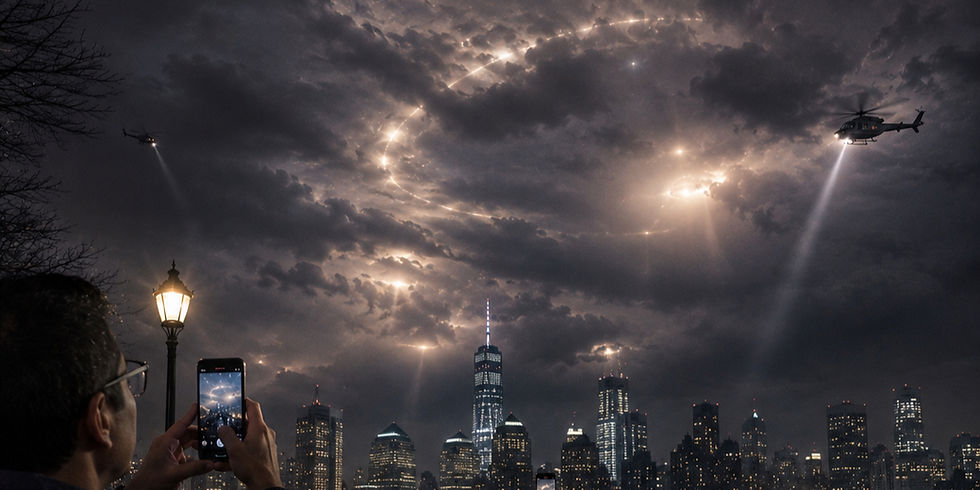
This is not surprising, as throughout history, humanity has persistently gazed upward with awe, seeking meaning, guidance, answers, and proof of something greater beyond the visible world. Questions about origin, purpose, identity, and whether humanity is alone in creation have accompanied every generation. Deep within the human heart lies the awareness that there must be more than what is merely seen.
For centuries, the heavens were viewed primarily through the lens of creation itself, declaring the glory and majesty of God. Yet as the modern age advanced through scientific discovery, technological development, space exploration, and the rapid expansion of media and entertainment, the cultural imagination increasingly shifted toward cosmic narratives, extraterrestrial possibilities, dimensional realities, and the belief that humanity’s greatest answers may ultimately lie beyond the earth itself.
Simultaneously, as confidence in the authority of Scripture gradually diminished throughout much of the modern world, particularly in the western world and especially since the industrial revolution, many began to look outward toward the cosmos for explanations regarding human origin, purpose, consciousness, and destiny. Fascination with ancient mysteries, hidden civilizations, alternative origin narratives, and higher intelligences increasingly entered mainstream thought and popular culture. As the world became more accessible and travel became easier, people started moving more freely across the globe, leading to the intermingling of ideas, beliefs, and cultures, which allowed for the breakdown of long-held beliefs and customs.
This contributes to the growing influence of modern fascination with extraterrestrial life, interdimensional beings, celestial mysteries, and supernatural phenomena in the skies throughout society. The ultimate deception aims not only to change humanity's understanding of the earth but also to alter its perception of the heavens.
Yet long before the modern world began speaking openly about higher beings, dimensional realities, cosmic consciousness, and supernatural phenomena appearing in the skies, Scripture had already warned that the closing moments of history would involve increasing deception connected to signs and wonders capable of influencing humanity on a global scale. Christ Himself declared: “And there shall be signs in the sun, and in the moon, and in the stars…” (Luke 21:25), while Revelation speaks of powers capable of producing astonishing manifestations before the world itself: “And he doeth great wonders, so that he maketh fire come down from heaven on the earth in the sight of men.” (Revelation 13:13), revealing that the final crisis would involve supernatural displays operating openly within human observation itself.
This may become particularly important in a civilization already influenced by scientific progress, modern theories, and constant exposure to cosmic stories, leading it to interpret unusual phenomena through extraterrestrial or interdimensional perspectives instead of biblical understanding.
For as fascination, openness, and continual engagement with such ideas increasingly shape the modern imagination, humanity gradually becomes more receptive to explanations and manifestations that earlier generations may once have approached with far greater caution, especially when such phenomena appear persuasive, emotionally compelling, intellectually expansive, or capable of offering meaning within an increasingly uncertain world.
Within such an environment, supernatural manifestations appearing in the heavens no longer remain automatically interpreted through the warnings preserved within Scripture, but increasingly become viewed through the language of advanced intelligences, higher consciousness, hidden knowledge, and spiritual evolution, especially within a generation taught to believe that humanity stands upon the edge of expanded awareness and cosmic discovery.
Society's conscience is being shaped by influential elements, and people have shifted from skepticism about what was once considered overtly occult, forbidden, and dangerous, to actively seeking experiences, sharing methods for engaging with the supernatural, and openly promoting it as positive. This growing fascination with hidden knowledge, ancient mysteries, suppressed truths, and alternative explanations about humanity's existence is spiritually significant because the quest for enlightenment apart from God has always posed the risk of leading humanity away from reliance on what He has already revealed.
For from the very beginning, the temptation presented to mankind involved the promise of expanded understanding beyond the boundaries God Himself had established, offering the illusion that truth, wisdom, and transcendence could be obtained independently from humble submission to His Word.
And perhaps nowhere is this danger now more visible than in the growing readiness of society to interpret apparitions, heavenly signs, supernatural experiences, and unexplained encounters through cosmic or multidimensional explanations rather than carefully testing such manifestations against the testimony of Scripture itself.
Of course this has been foretold by God. He has warned His people for millenia about the dark practices to avoid. Not because He wants to hide knowledge from us, but because His love for us is so great, that He wants to spare us the pain of where these practices will lead us.
That is why, even as interest grows in what we recognize as cosmic signs, supernatural wonders, and higher intelligences, — compared to how God described them in His Word: such as witchcraft, soothsaying, conjuring spells, practicing sorcery, interpreting omens, consulting with spiritists and mediums, or calling up the dead—Scripture consistently urges God's people to return to the same unchanging foundation: “To the law and to the testimony…” (Isaiah 8:20)
No manifestation, sign, heavenly phenomenon, or supernatural experience should be accepted simply because it seems extraordinary, persuasive, advanced, or beyond current human explanation. The ultimate deception does not only aim to openly deny God.
It aims to alter humanity’s understanding of spiritual reality, presenting explanations, manifestations, and experiences convincing enough to shift the world away from reliance on divine revelation. Instead, it encourages trust in signs, wonders, hidden knowledge, and supernatural guidance increasingly appearing to nations, thereby weakening reliance on the only sure defense against Satan's attacks and deception, and leading the world into rebellion against the Most High and only God.
THE NORMALISATION OF THE SUPERNATURAL
So perhaps this is where the trajectory now unfolding across the modern world becomes increasingly difficult to ignore, because what once appeared as isolated fascination of spiritualism or occult practices, no longer remains confined to scattered movements operating independently from one another, but increasingly converges across culture, entertainment, spirituality, philosophy, technology, and collective imagination itself.
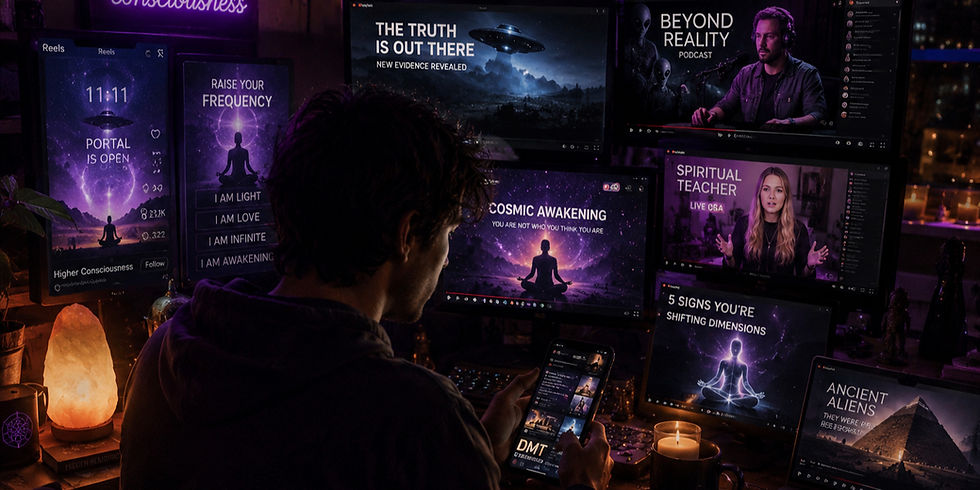
This is easily identified when we do a general scan across history's timeline, where we find that the world did not arrive at this condition suddenly, nor through a single movement alone, but through a gradual progression unfolding across generations, where ideas and practices once approached far more cautiously steadily became familiar, emotionally persuasive, culturally accepted, and deeply integrated into everyday life itself.
THE RISE OF MODERN SPIRITUALISM
Nowhere was this shift more visible in modern time, than in the rise of nineteenth-century spiritualism itself. What began publicly through the claims surrounding the Fox sisters in Hydesville, New York during 1848 rapidly expanded into séances, spirit communication, automatic writing, table-turning, mediumship, and widespread fascination with contact between the living and the dead. Newspapers, public demonstrations, travelling mediums, and growing curiosity surrounding hidden spiritual knowledge helped transform what may once have remained isolated practices, into an international movement influencing both religious thought and popular culture alike.
At the same time, figures such as Helena Blavatsky helped spread concepts surrounding hidden masters, esoteric enlightenment, reincarnation, occult wisdom, and universal spiritual evolution, throughout Europe and America during the late nineteenth century, while movements such as Theosophy increasingly blended Eastern mysticism, secret society philosophy, spirit communication, and alternative spiritual revelation into systems that would later influence large portions of modern New Age spirituality itself.
Practices such as spirit photography, mesmerism, automatic writing, and talking boards steadily moved from hidden ritual and occult practices into public fascination beginning from the Victorian period, and ever continue to be normalised and glorified in the 21st centaury, helping to popularise the belief that unseen intelligences could communicate directly with humanity through supernatural means.
THE SUPERNATURAL ENTERS MASS CULTURE
As the twentieth century emerged, the supernatural increasingly moved beyond spiritualist gatherings alone and entered the wider imagination of society through literature, stage performance, radio, cinema, psychology, philosophy, and entertainment itself. What earlier generations may once have approached primarily as forbidden, occult practice steadily became reframed through storytelling, speculative thought, mystical exploration, and emotionally compelling public fascination.
During this same period, figures such as Aleister Crowley became especially significant within the broader progression of occult philosophy entering modern culture. Through ceremonial magic, mystical ritual, altered states of consciousness, spiritual rebellion, and the philosophy expressed through his system known as Thelema, Crowley helped popularise ideas surrounding personal spiritual awakening detached from biblical authority, self-directed enlightenment, hidden power, and the breaking of traditional moral and spiritual boundaries. Though once associated largely with underground movements, many of the concepts tied to his influence would later echo throughout countercultural spirituality, entertainment, music culture, and modern mystical philosophy during the decades that followed.
At the same time, personalities such as Edgar Cayce gained enormous public attention through trance readings, prophetic claims, healing guidance, reincarnation concepts, and hidden spiritual knowledge, while psychologist Carl Jung increasingly explored archetypes, collective consciousness, dream symbolism, and mystical dimensions of human experience that helped reshape how many began interpreting spirituality, consciousness, and unseen reality itself.
Even as illusionists such as Harry Houdini publicly exposed fraudulent mediums and deceptive séance practices, fascination with paranormal communication, psychic ability, spirit contact, and supernatural manifestation continued expanding throughout popular culture rather than diminishing.
COSMIC CONSCIOUSNESS AND COUNTERCULTURE
By the middle of the twentieth century, the supernatural had become increasingly intertwined with countercultural philosophy, altered consciousness, extraterrestrial fascination, mystical exploration, and the growing rejection of traditional biblical frameworks throughout much of Western society.
The emergence of the space age further intensified humanity’s fascination with the heavens and the possibility of advanced life beyond the earth itself. As space exploration, lunar missions, satellite technology, and growing scientific discussion surrounding the cosmos captured global attention throughout the Cold War era, generations increasingly grew up viewing humanity not merely through the lens of earthly existence alone, but as part of a far larger cosmic reality filled with expanding questions surrounding life, intelligence, and humanity’s place within the universe.
Concurrent to this, Eastern mysticism, meditation, spiritual discipline, transcendental philosophy, martial arts spirituality, and ideas surrounding expanded consciousness steadily spread throughout the Western world during the 1960s and 1970s, particularly through influential cultural figures such as The Beatles and their public association with Maharishi Mahesh Yogi. Concepts once largely unfamiliar within Western Christianity increasingly entered mainstream culture through music, cinema, literature, self-development movements, and spiritual experimentation itself.
This same period also witnessed the rapid growth of occult influence throughout elements of modern music and countercultural philosophy. Figures associated with the entertainment world increasingly explored mystical symbolism, ritual themes, altered consciousness, spiritual rebellion, and esoteric philosophy, while the writings and image of Aleister Crowley became widely referenced throughout portions of twentieth-century music culture, helping move ideas once associated with hidden practices further into mainstream visibility and fascination.
On a parallel to this, fascination surrounding unidentified flying objects, alien encounters, and extraterrestrial intelligence steadily intensified following highly publicised events such as the 1947 Roswell incident and the rise of modern UFO culture throughout the Cold War era. Claims of alien abductions, interdimensional encounters, and cosmic communication increasingly shaped public imagination through books, documentaries, conferences, and entertainment franchises that presented advanced non-human intelligences as part of humanity’s expanding understanding of reality itself.
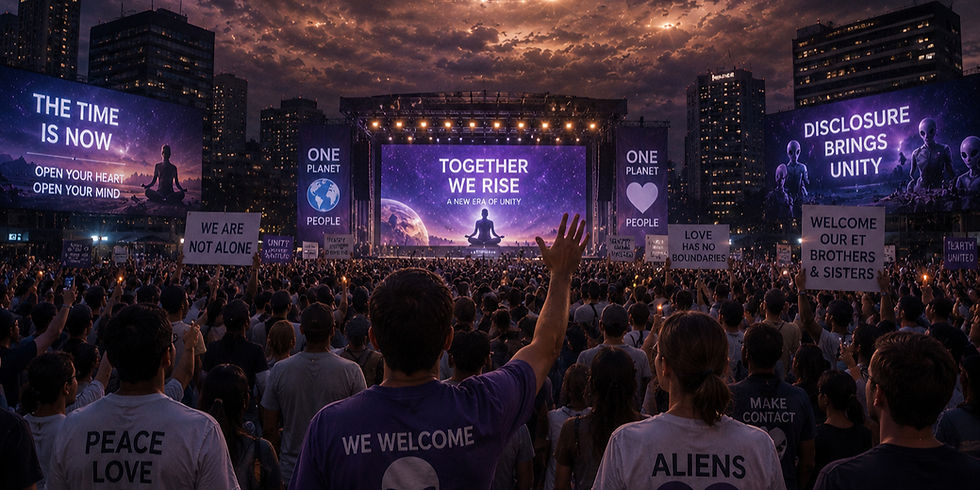
Whilst television series such as Star Trek, Lost in Space, Mork & Mindy, The X-Files, and later productions centred upon extraterrestrials, paranormal investigation, hidden conspiracies, and cosmic evolution steadily helped normalise the supernatural, the interdimensional, and the extraterrestrial within the imagination of entire generations.
Meanwhile, New Age spirituality expanded rapidly through influential figures such as Shirley MacLaine, whose public promotion of reincarnation, channeling, cosmic consciousness, and spiritual evolution helped move mystical philosophy further into mainstream acceptance throughout the late twentieth century via her books and miniseries, which then spurred the boom of mysticisms channeling through people like J.Z. Knight and the concurrent rise of Astrology through horoscope readings by people such as Linda Goodman.
THE SUPERNATURAL ENTERS EVERYDAY LIFE
By the closing decades of the twentieth century and into the twenty-first, supernatural themes no longer remained confined to fringe spirituality, speculative fiction, or countercultural movements alone, but increasingly became woven directly into mainstream entertainment, childhood imagination, digital culture, and everyday social experience itself.
Fantasy literature, comics, superhero mythology, paranormal television, mystical anime, psychic entertainment, horror franchises, supernatural gaming, and cinematic universes built around hidden powers, alternate dimensions, magical awakening, spiritual entities, and cosmic warfare steadily shaped how entire generations emotionally related to the unseen world.
Series such as Harry Potter and the Philosopher's Stone and its global franchise helped normalise magical systems, mystical training, hidden spiritual worlds, and supernatural empowerment within childhood imagination itself, while modern superhero mythology increasingly presented saviour archetypes, transcendent beings, cosmic protectors, and supernatural transformation through frameworks detached from biblical revelation.
At the same time, social media, streaming platforms, podcasts, paranormal influencers, manifestation culture, tarot content, UFO disclosure movements, meditation applications, psychedelic spirituality, and digital spiritual communities increasingly reshaped how younger generations engage with spiritual experience, hidden knowledge, supernatural manifestation, and alternative understandings of reality itself.
Even governmental and institutional interest in paranormal and unexplained phenomena has increasingly contributed to this growing normalization. Declassified programs such as the CIA-associated Stargate and CE-5 projects publicly revealed that intelligence agencies explored concepts such as remote viewing and psychic perception during the Cold War era, while recent public discussions surrounding unidentified aerial phenomena, military disclosures, and congressional hearings concerning unexplained encounters have further shifted supernatural and extraterrestrial narratives away from fringe speculation and toward mainstream public consideration itself.
Now this becomes especially significant because the supernatural rarely enters society appearing openly hostile toward humanity or directly opposed to spiritual truth. More often it appears compassionate, enlightening, peaceful, emotionally reassuring, technologically advanced, or capable of offering answers beyond the uncertainty of the present world. Which gradually reshapes perception through familiarity, long before many recognise the spiritual implications operating beneath what is being embraced.
At the same time, growing openness toward near-death experiences, paranormal encounters, mystical consciousness, secret knowledge, ancient mysteries, and supernatural phenomena increasingly conditions the modern mind to interpret spiritual manifestations positively rather than cautiously, especially when such experiences appear compassionate, emotionally persuasive, intellectually expansive, spiritually uplifting and bring the feeling of overwhelming love or healing.
And perhaps this is what makes repeated openness toward such manifestations so spiritually dangerous, because deception does not merely seek to influence human thought externally, but gradually works to reshape perception itself, drawing the mind, emotions, and spiritual affections toward increasing trust in experiences and influences operating apart from the authority of God’s Word. For what humanity continually welcomes eventually begins affecting not only belief, but discernment itself, until the line between spiritual truth and spiritual persuasion becomes progressively more difficult for many to recognise and maybe this is why Scripture states that "The coming of the lawless one is according to the working of Satan, with all power, signs, and lying wonders, and with all unrighteous deception among those who perish, because they did not receive the love of the truth, that they might be saved. And for this reason God will send them strong delusion, that they should believe the lie, that they all may be condemned who did not believe the truth but had pleasure in unrighteousness". (2 Thessalonians 2:9-12).

This serves as a strong caution against succumbing to the allure, emotions, or comforting teachings of Spiritualism. In such an environment, it becomes increasingly challenging for many to differentiate between spiritual deception and enlightenment, particularly in a society already influenced by experiential belief, emotional reasoning, and constant exposure to supernatural themes through media, popular culture, and collective imagination.
The danger emphasized throughout Scripture has never solely focused on outright rebellion against God, but rather on manifestations that are convincing enough to seem beautiful, beneficial, enlightened, peaceful, and even spiritually good, gradually leading humanity to place trust in experiences, signs, and supernatural guidance disconnected from the authority of what God has already revealed.
This perhaps indicates how thoroughly the conditions for the final deception have been set, as the world is no longer just curious about the supernatural. It is gradually being conditioned to trust it.
It is exactly in such an environment that the movement toward false unity starts gaining significant influence, because when spiritual experience, supernatural persuasion, emotional consensus, and collective fascination are elevated above the authority of divine revelation, humanity becomes increasingly susceptible to forms of unity based not on truth itself, but on shared experience, shared fear, shared wonder, and shared spiritual persuasion.


Comments